From PET Preform to Bottle
The Journey of a PET Container
The Journey of a PET Container
Have you ever wondered how that crystal-clear water bottle or soda container takes shape? The journey from raw material to the perfectly formed bottle in your hand is a marvel of modern engineering. Today, we’re tracing the fascinating lifecycle of PET containers, demystifying the transformation from PET preform to finished bottle—a process that combines precision manufacturing, material science, and sustainability considerations.
Understanding this journey isn’t just fascinating—it’s essential for beverage brands, packaging engineers, and sustainability professionals who need to make informed decisions about their packaging solutions.
What is a PET Preform? The Starting Point
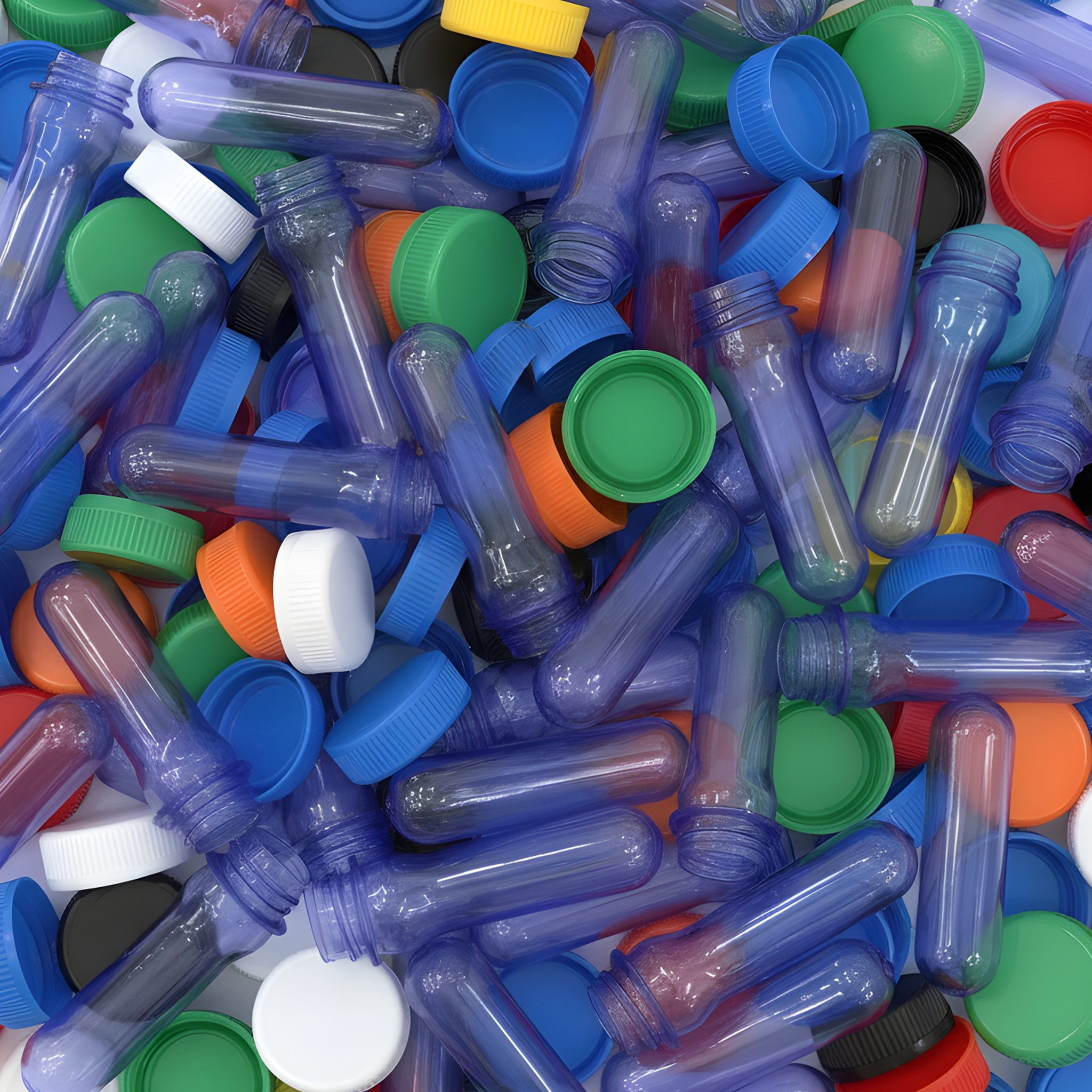
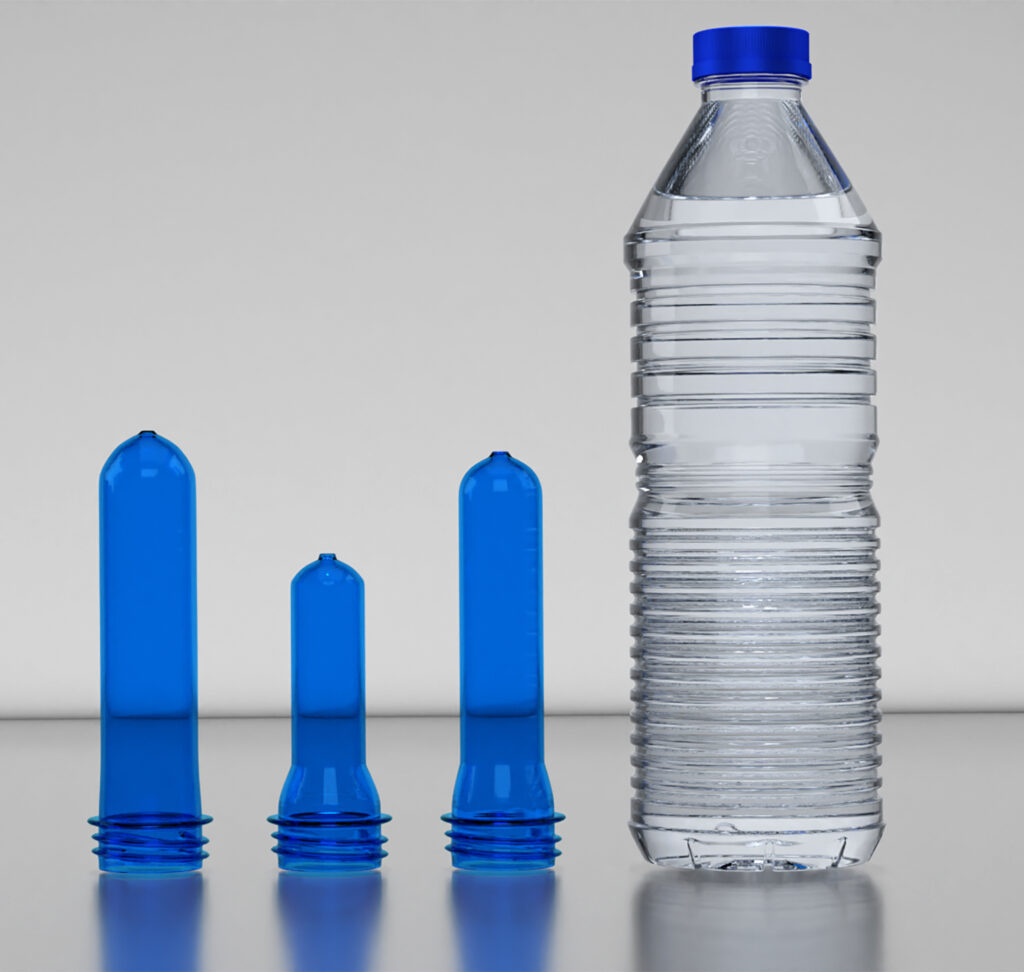
A PET preform is essentially a test-tube shaped plastic blank that contains all the material needed for the final bottle. Think of it as a “bottle embryo”—a compact, thick-walled precursor that will be transformed into its final shape through a carefully controlled process.
Key characteristics of PET preforms:
- Made from Polyethylene Terephthalate (PET) polymer
- Contains the precise weight of material for the final bottle
- Features the bottle neck and thread already fully formed
- Available in various colors (including clear, blue, green) and recycled PET (rPET) options
The Journey: 5 Key Stages from PET Preform to Bottle
Stage 1: Material Preparation & Preform Manufacturing
The journey begins with PET resin—either virgin or recycled—which undergoes injection molding to create the preforms. This stage is critical because it determines:
- Material integrity and barrier properties
- Improved clarity and transparency
- Better barrier properties against CO₂ and O₂
Stage 2: Heating & Conditioning
The journey begins with PET resin—either virgin or recycled—which undergoes injection molding to create the preforms. This stage is critical because it determines:
- It makes the PET pliable enough for stretching
- Ensures even temperature distribution
- Prevents material degradation
Industry Insight: Advanced heating systems use multiple zones to create temperature gradients along the preform, allowing for better material distribution in complex bottle designs.
Stage 3: Stretch Blow Molding – The Transformation
This is where the magic happens. The heated preform is transferred to a blow mold and undergoes biaxial orientation:
Stretching: A stretch rod extends the preform lengthwise
Blowing: High-pressure air (20-40 bar) expands the preform radially against the mold
This simultaneous two-direction stretching aligns the polymer molecules, creating:
- Enhanced strength despite thinner walls
- Improved clarity and transparency
- Better barrier properties against CO₂ and O₂
Stage 4: Cooling & Ejection
Once the bottle takes its final form, it’s cooled within the mold before being ejected. Modern systems use rapid cooling technology to:
- Reduce cycle times
- Minimize energy consumption
- Prevent bottle distortion
Stage 5: Quality Control & Finishing
Every bottle undergoes rigorous checks for:
- Dimensional accuracy (height, diameter, wall thickness)
- Top-load strength (resistance to stacking pressure)
- Leak integrity when capped
- Visual defects (haziness, streaks, or imperfections)
The Science Behind the Transformation: Why PET?
PET’s unique properties make it ideal for this journey:
Crystallinity Control
PET can exist in amorphous (clear) or crystalline (opaque) states. The stretch blow molding process carefully controls this transition to optimize clarity and strength.
Molecular Orientation
The biaxial stretching aligns polymer chains, creating a material that’s stronger than steel by weight for the same application.
Barrier Enhancement
Oriented PET provides excellent barrier properties, keeping carbonation in and oxygen out—crucial for beverage preservation.
Sustainability Journey: The Circular Path
The journey doesn’t end when the bottle is empty. Modern PET containers are designed for circularity:
1. Collection & Sorting
Used bottles are collected and sorted by polymer type
2. Washing & Shredding
Contaminants are removed, and bottles are ground into flakes
3. Reprocessing
Flakes are converted back into food-grade rPET
4. New Life
rPET becomes new preforms, continuing the journey
Industry Trend: Brands are increasingly using rPET preforms containing 25-100% recycled content, significantly reducing the carbon footprint of their packaging.
| Bottle Type | Preform Requirements | Key Considerations |
|---|---|---|
| Carbonated Drinks | Higher IV (0.80-0.84 dl/g), specific weight distributio | Pressure resistance, CO₂ barrier |
| Water | Standard IV (0.72-0.78 dl/g), lightweight options | Clarity, cost optimization |
| Hot-Fill Products | Heat-set formulations, thicker walls | Thermal stability up to 85°C |
| Chemical/Specialty | Enhanced barrier layers, specialized neck finishes | Chemical resistance, safety |
Common Challenges in the Preform-to-Bottle Journey
Inconsistent Wall Thickness
Results from improper heating or stretch rod timing. Solution: Optimize oven temperature zones
Haze or Cloudiness
Caused by moisture in PET or improper cooling. Solution: Ensure proper material drying before injection molding
Low Top-Load Strength
Insufficient orientation or material distribution. Solution: Adjust stretch rod speed and pressure curves
Cap Compatibility Issues
Inaccurate neck finish dimensions. Solution: Strict quality control on preform neck tooling.
The Future: Where is the Journey Headed?
Lightweighting 2.0
Advanced preform designs enabling bottles with 30% less material without sacrificing strength.
Smart Integration
Preforms designed to work with intelligent caps featuring NFC tags and freshness indicators
Bio-Based PET
Preforms made from renewable sources alongside traditional petroleum-based PET.
Industry 4.0
AI-powered optimization of the entire blow molding process based on real-time sensor data
Conclusion: More Than Just a Bottle
The journey from PET preform to finished bottle represents one of packaging’s most efficient transformations—where precision engineering meets material science to create containers that are lightweight, strong, sustainable, and cost-effective.
Understanding this journey empowers brands to make better decisions about their packaging, from selecting the right preform specifications to optimizing their production line efficiency and meeting sustainability goals.